How Much BHB Is Actually in a Keto Gummy?
The short version
You can almost always work out how much BHB salt is in a product even when the label hides it inside a proprietary blend. The trick is that each BHB salt is a known, fixed percentage mineral by mass, and the mineral lines on the Supplement Facts panel are not optional. Divide one by the other and you get a hard ceiling.
- Sodium BHB is 18.2% sodium. Calcium BHB is 16.3% calcium. Magnesium BHB is 10.5% magnesium.
- Declared minerals therefore cap the salt content — you cannot have more salt than the mineral allows.
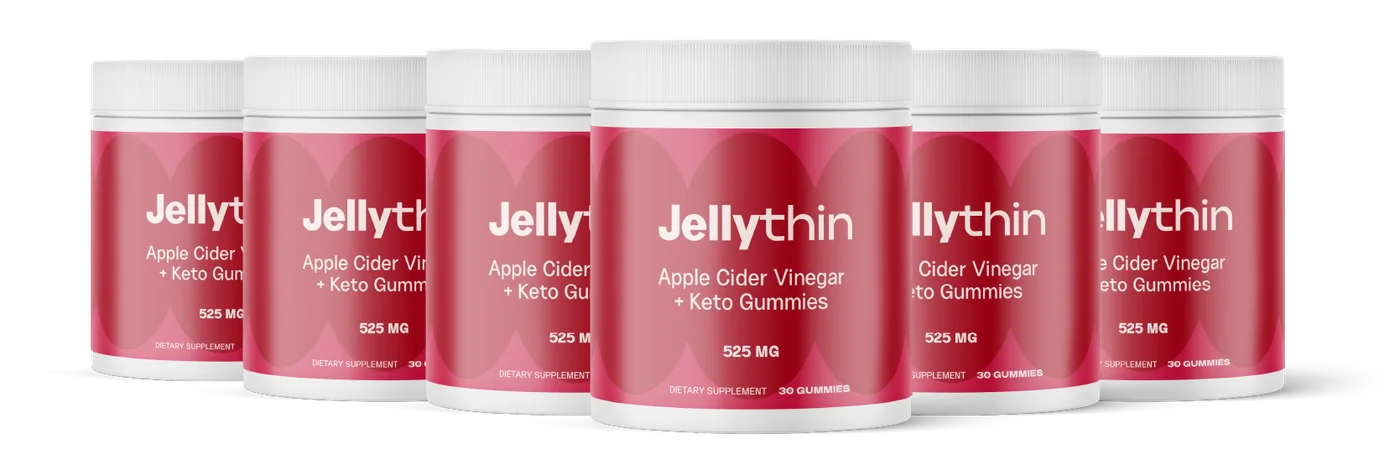
- Worked on JellyThin's panel, the ceiling is about 27 mg of ketone salts inside a 525 mg blend.
Why the label hides it in the first place
United States labelling rules permit a manufacturer to group several ingredients under a single "proprietary blend" line, print the combined weight, and list the components in descending order of quantity without saying how much of each (FDA Dietary Supplement Labeling Guide). The stated reason is trade secrecy. The practical effect is that a blend can be 98% of a cheap ingredient and 2% of the expensive one that the marketing is built around, and the label will look identical either way.
This is not fraud and it is not rare. The other three checks that still work on a hidden blend are in reading a proprietary blend label. It is the default for most of the category. But it does mean that reading the front of the bottle tells you approximately nothing, and reading the blend line tells you only slightly more.
The chemistry that gives it away
Beta-hydroxybutyrate is an anion. To put it in a powder or a gummy it has to be paired with a positively charged mineral — usually sodium, calcium or magnesium. That pairing has a fixed formula and therefore a fixed mass ratio:
- Sodium BHB, NaC4H7O3, has a molar mass of about 126.1, of which sodium is 23.0 — so 18.2% sodium.
- Calcium BHB, Ca(C4H7O3)2, is about 246.3, of which calcium is 40.1 — 16.3% calcium.
- Magnesium BHB, Mg(C4H7O3)2, is about 230.5, of which magnesium is 24.3 — 10.5% magnesium.
Meanwhile, sodium, calcium and magnesium all have to be declared individually on the panel when present in meaningful amounts. So the label is quietly telling you the answer in a different column.
A proprietary blend hides the ratio. It cannot hide the minerals — and the minerals are the ratio.
Working it on a real panel
Take the panel on the product this site covers. It declares Sodium 2.5 mg, Calcium 1 mg and Magnesium 0.75 mg, then a 525 mg proprietary blend of apple cider vinegar with calcium, magnesium and sodium BHB. Divide each mineral by its mass fraction:
- 2.5 mg sodium ÷ 0.182 = 13.7 mg sodium BHB at most
- 1 mg calcium ÷ 0.163 = 6.1 mg calcium BHB at most
- 0.75 mg magnesium ÷ 0.105 = 7.1 mg magnesium BHB at most
Total: about 27 mg of ketone salts. The blend is 525 mg. So roughly 498 mg — around 95% — is the apple cider vinegar listed first.
Why these are ceilings, not measurements
This method gives an upper bound, and it is important to say so. Minerals can arrive from more than one place. On this particular label, "Other Ingredients" includes sodium citrate, which is itself a sodium salt. Any sodium coming from the citrate is sodium that is not coming from sodium BHB, so the true sodium BHB figure is lower than 13.7 mg — possibly much lower.
The same caution applies generally: calcium carbonate used as a filler, magnesium stearate used as a flow agent, mineral-rich botanical powders. Every one of them inflates the mineral line without adding any ketone salt. The arithmetic is therefore a generous best case for the product.
What amount would actually do something
For context, research that successfully raises circulating ketones with exogenous salts or esters typically uses doses in the range of 10 to 12 grams per serving, and often reports gastrointestinal complaints at that level (Newman & Verdin 2017, PubMed 28826372). Between 27 mg and 10 g there are roughly two and a half orders of magnitude. That gap is why keto gummies do not put your body into ketosis, and why a keto gummy is not the same mechanism as a ketogenic diet. There is no reading of the evidence on which a milligram-scale dose produces a measurable change in blood BHB.
That does not make the product useless — the vinegar it mostly consists of has its own modest literature, and a daily habit you will actually keep has value. It does mean the word "keto" on the front of the jar is describing an ingredient list, not a physiological effect (StatPearls, NCBI Bookshelf: The Ketogenic Diet).
Try it on the next label you pick up
The method generalises. Any time you see a mineral-salt form of an active — magnesium citrate, zinc picolinate, calcium ascorbate — the elemental mineral declared on the panel constrains how much of the compound can be there. It is the single most useful thing you can do with a Supplement Facts panel in under a minute, and it works on products whose manufacturers would very much prefer it did not.
See the label this was written from
The full Supplement Facts transcription, the blend arithmetic and today's official-store pricing — on one page.
Get OfferFrequently asked questions
Does this work for every proprietary blend?
Only where an ingredient contains a mineral that must be declared separately. It works well for mineral salts. It does not help with botanical extracts, which is why blends of herbs stay genuinely opaque.
Could the manufacturer just under-declare the minerals?
Declared amounts have to be accurate within labelling tolerances, and minerals are cheap and easy to assay, so there is little incentive to misstate them. The bigger source of error runs the other way: extra minerals from fillers inflate the line and make our estimate too generous.
Is a small amount of BHB harmful?
No. At milligram amounts it is nutritionally irrelevant in either direction. The issue is expectation, not safety.