How to Read a Proprietary Blend
The short version
A proprietary blend gives you one number for several ingredients. That is legal and extremely common, and it is the single biggest obstacle to comparing supplements honestly. But a blend is not a black box: four properties of the panel leak information regardless of what the manufacturer intended to disclose.
- Components must be listed in descending order by weight.
- Minerals inside the blend must still be declared separately.
- The blend total sets a hard ceiling on every component.
- The "Other Ingredients" line often names what is really doing the bulking.
Technique 1: descending order tells you the ranking
The components of a blend have to appear in order of decreasing weight (FDA Dietary Supplement Labeling Guide). That is a weaker guarantee than a number, but it is not nothing. If the ingredient the entire product is named after appears fourth out of five, you have learned something important — the marketing hero is a minority component.
Conversely, when a cheap bulking ingredient is listed first, it is first because it weighs the most. Manufacturers know this looks bad, which is why you will occasionally see a blend listed in what is clearly not weight order. That is a labelling violation and a reason to distrust everything else on the panel (FDA Dietary Supplement Labeling Guide).
Technique 2: minerals cannot hide
This is the most powerful one. When an ingredient is a mineral salt, the elemental mineral has to be declared on its own line — and each salt is a fixed percentage mineral by mass. Dividing the declared mineral by that percentage gives you a hard upper bound on how much of the compound can be present, no matter what the blend line says.
We work this through in full on a real 525 mg blend in our piece on ketone salts, where three declared minerals cap the "tri-mineral BHB trio" at about 27 mg. Same panel, same ingredients, completely different picture from the one the front label paints.
The blend total is a ceiling for every ingredient in it. That one observation kills more supplement claims than any lab test.
Technique 3: the ceiling test
The simplest check, and the one most people skip. Look up the dose used in the research for the blend's headline ingredient. If that dose is larger than the entire blend, the product cannot be delivering it — arithmetic, not opinion.
This disposes of a remarkable number of products in seconds. A 500 mg blend containing eight ingredients cannot deliver the 600 mg of one of them the trials used, and it does not matter how the remaining 500 mg is arranged. Any claim that depends on that dose is unsupportable by the label itself.
Technique 4: read the Other Ingredients line
Everything below the panel — the fillers, binders, sweeteners and flow agents — is required to be listed too, and it is frequently more informative than the panel above it (FDA: Changes to the Nutrition Facts Label). It tells you what the product is physically made of. It also, importantly, tells you where else a declared mineral could be coming from: a sodium citrate or a calcium carbonate down there means the sodium or calcium line above is not purely from the active.
In a gummy specifically, this line is where you learn how much of the product is sugar syrup. That is the same line our guide to hidden carbs in keto gummies tells you to read, and the wider panel walk-through is in how to read a keto gummy label. That is worth knowing before you take one daily for six months.
What a good label looks like
The contrast is instructive. A well-labelled supplement lists each active on its own line with its own milligram amount, names the standardisation where one applies — "20% bacosides", "24% extract" — and does not need a blend at all. When you see that, you can compare it directly against the literature. A trace mineral like chromium is the clearest case, as chromium picolinate and carb cravings shows. When you see a blend, you are being asked to trust rather than to check.
Neither is automatically a scam. Blends exist for legitimate reasons and plenty of blended products are fine (NCCIH: Using Dietary Supplements Wisely). But the burden of proof shifts, and you should price that in.
A two-minute routine
Find the blend total
Everything inside it is bounded by this number. Write it down.
Rank the components
Where does the ingredient in the product's name sit? First is honest. Last is a tell.
Back-calculate any minerals
Declared mineral ÷ mass fraction = upper bound on the salt.
Compare with the research dose
If the study dose exceeds the blend total, the claim fails on arithmetic alone.
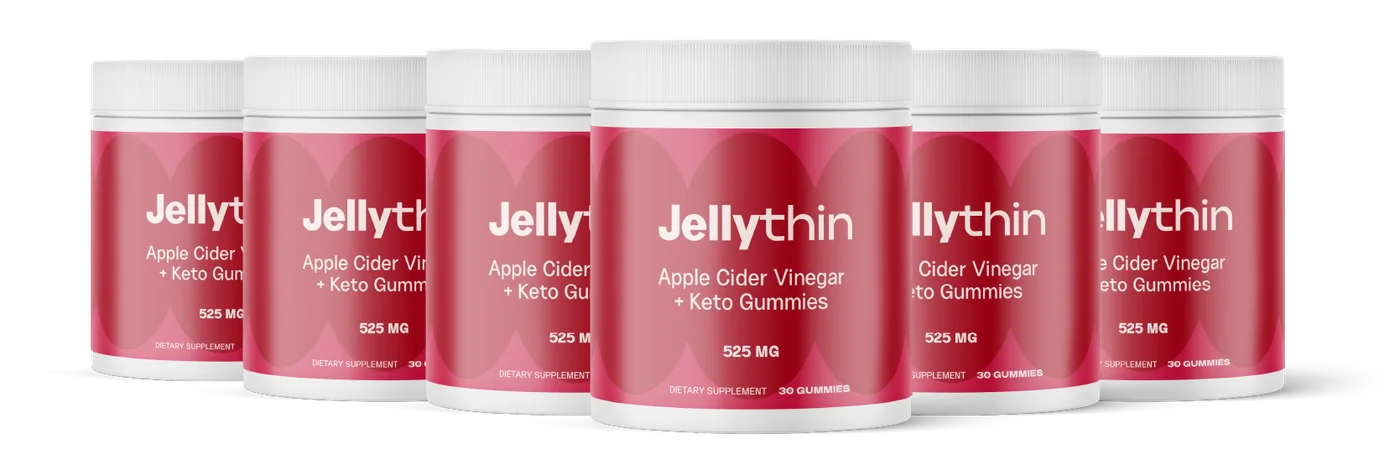
See the label this was written from
The full Supplement Facts transcription, the blend arithmetic and today's official-store pricing — on one page.
Get OfferFrequently asked questions
Are proprietary blends illegal?
No. US regulations explicitly allow a combined weight with components in descending order. The criticism is that it makes independent comparison nearly impossible, not that it breaks a rule.
Why would an honest company use one?
Genuine formulation trade secrecy exists, and a company that has spent money on a ratio may not want a competitor to copy it. The cost is that buyers cannot verify anything, which is a real cost.
What is 'pixie dusting'?
Adding a token amount of an impressive ingredient so it can appear on the label, while the blend is mostly something cheap. The ceiling test and the descending-order rule are how you catch it.