JellyThin® Ingredients List: What Is in Each Jelly Thin Gummy
Quick answer
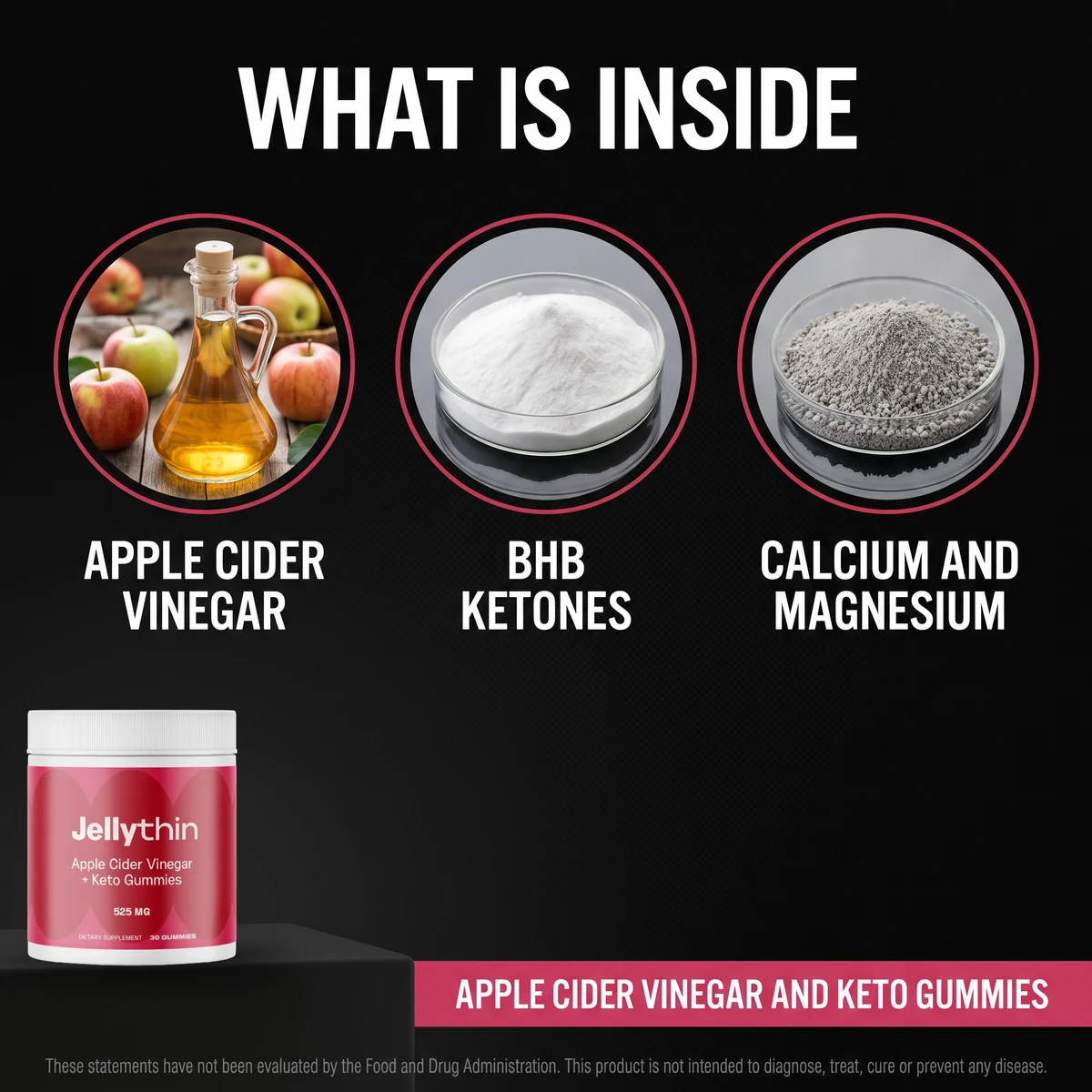
JellyThin ingredients are apple cider vinegar plus three BHB ketone salts: calcium BHB, magnesium BHB and sodium BHB. All four sit in one 525 mg proprietary blend in each 2.5 g gummy. The gummy base is corn syrup, purified water, pure cane sugar, apple pectin, citric acid, sodium citrate, tapioca starch, natural flavors and beet root powder. The label does not publish the split inside the blend.
Key facts
- Four actives: apple cider vinegar, calcium BHB, magnesium BHB and sodium BHB.
- One 525 mg proprietary blend per 2.5 g gummy.
- Per gummy: 8 calories, 2 g carbohydrate, 2 g total sugars (1 g added).
- Minerals declared: 2.5 mg sodium, 1 mg calcium, 0.75 mg magnesium.
- Pectin-set gummy, so no gelatin. Stimulant-free.
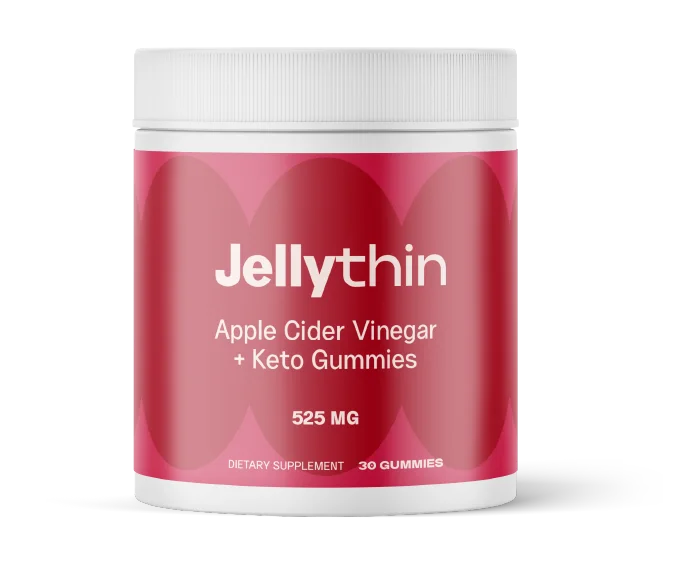
See the full label on the official page
One gummy a day, 30 gummies per bottle and a 60-day money-back guarantee.
See today's price and guaranteeWhat are the main ingredients in JellyThin?
The main ingredients in JellyThin are apple cider vinegar and three forms of beta-hydroxybutyrate, called BHB. Each BHB form is bound to a mineral: calcium, magnesium or sodium. That gives four named actives in total. They are listed together on the Supplement Facts panel as one proprietary blend of 525 mg per gummy.
Apple cider vinegar is printed first in the blend. On a supplement label, ingredients in a blend are listed from the largest amount to the smallest. So apple cider vinegar is the biggest part of the 525 mg, but the label does not say by how much. Many people search for the Jelly Thin ingredients because they want to know exactly this: what is inside and in what amount. The honest answer is that the names are printed and the split is not.
That is common in this category, and it is legal. It still matters for your expectations. You can read more about that kind of label in our guide on how to read a proprietary blend.
Apple cider vinegar: the lead JellyThin ingredient
Apple cider vinegar is the most studied of the four Jelly Thin ingredients. Its active part is acetic acid. In meal studies, acetic acid slows how fast the stomach empties and flattens the rise in blood glucose after a starchy meal. Those two effects are the ones most often linked with feeling full for longer.
A gummy gives you the vinegar without the sharp taste, the smell or the burn of a spoonful. That is the main reason the format exists. Many people try liquid vinegar and stop after a short time. A soft gummy is easier to keep up for months. Keep in mind that the research covers vinegar as an ingredient, usually as a liquid, and not this finished gummy.
Calcium, magnesium and sodium BHB: the three ketone salts
BHB is the ketone body your liver makes from fat when carbohydrate is low. Muscle and brain can use it as fuel. Free BHB is unstable and tastes poor, so supplements bind it to a mineral and sell it as a salt. JellyThin uses three salts instead of one:
- Calcium BHB. BHB bound to calcium. The panel declares 1 mg of calcium per gummy.
- Magnesium BHB. BHB bound to magnesium, a mineral with a role in normal energy metabolism. The panel declares 0.75 mg of magnesium per gummy.
- Sodium BHB. BHB bound to sodium, the electrolyte side of the trio. The panel declares 2.5 mg of sodium per gummy.
Spreading the BHB across three minerals means the mineral load is not piled onto sodium alone. The small mineral numbers also show that the ketone salts can only be a small share of the 525 mg blend. Trials that raise blood ketones use grams of BHB, not milligrams. So read the word "keto" on the label as the name of the category, not a promise of ketosis. Our post on how much BHB is in a keto gummy walks through that arithmetic.
The JellyThin gummy base: other ingredients
Every gummy needs a base to hold its shape and taste. The other ingredients printed on the JellyThin label are:
- Corn syrup
- Purified water
- Pure cane sugar
- Apple pectin
- Citric acid
- Sodium citrate
- Tapioca starch
- Natural flavors
- Beet root powder
Apple pectin sets the gummy, so there is no gelatin. Beet root powder gives the colour. Corn syrup and cane sugar give the sweetness, which is why each gummy carries 2 g of total sugars, 1 g of it added. If you count carbohydrate closely, that is the line to watch. See our guide on hidden sugar in keto gummies for how it adds up across a month.
JellyThin supplement facts per gummy
| Line on the panel | Amount per gummy |
|---|---|
| Calories | 8 |
| Total carbohydrate | 2 g |
| Total sugars | 2 g (includes 1 g added sugars) |
| Sodium | 2.5 mg |
| Calcium | 1 mg |
| Magnesium | 0.75 mg |
| Proprietary blend: apple cider vinegar, calcium BHB, magnesium BHB, sodium BHB | 525 mg |
These numbers are the checkable part of the product. When a bottle arrives, you can hold it next to this table and confirm the panel matches. If it does not match, contact customer support from your order email before you use it.
What the Jelly Thin ingredients list does not tell you
A label tells you a lot, but not everything. For Jelly Thin, the panel does not show how many milligrams of apple cider vinegar are in each gummy. It does not show the amount of each BHB salt. It does not print an acetic acid figure for the vinegar. And no clinical trial has tested the finished gummy.
None of that makes the product a bad choice. It means the right way to judge it is on what is printed: a simple once-daily gummy, a clear nutrition panel, a defined price and a 60-day money-back window. Our post on the Jelly Thin 525mg blend number covers the blend total in more depth.
How to use the JellyThin ingredients list before you buy
Use the list as a short checklist. First, look at the sugar line if you track carbohydrate. Second, check the mineral lines if you follow a sodium-restricted plan, even though 2.5 mg is a small amount. Third, look at the other ingredients for anything you avoid, such as corn syrup or cane sugar. Fourth, if you take medication, especially for blood sugar, blood pressure or the heart, show the label to your doctor first. The same applies if you are pregnant or nursing.
The label directions are simple. Adults take one gummy a day, about 30 minutes before a morning or afternoon meal, with a full glass of water. One bottle of 30 gummies lasts 30 days at that rate. For side-effect questions, read our post on keto ACV gummy side effects and who should avoid them, and for prices go to the JellyThin pricing section.
Frequently asked questions
What are the main ingredients in JellyThin?
Apple cider vinegar, calcium BHB, magnesium BHB and sodium BHB, together in one 525 mg proprietary blend per 2.5 g gummy.
Does JellyThin contain gelatin?
No. The gummy is set with apple pectin. The other ingredients are corn syrup, purified water, pure cane sugar, citric acid, sodium citrate, tapioca starch, natural flavors and beet root powder.
How much sugar is in each JellyThin gummy?
Each gummy has 2 g of total sugars, with 1 g of that added sugar, and 8 calories.
Our view
The JellyThin ingredients list is short and clear. Four named actives sit in one 525 mg blend, on a pectin gummy base with a small amount of sugar. The split inside the blend is not published, so set your expectations on the routine, not on a dose.
If the list suits you, check it against the bottle when it arrives and use the 60-day window to decide whether the habit fits your day.
Check today's price and guarantee
Compare the three bundle sizes and read the guarantee terms on the official page.
See today's price and guarantee