How Many ACV Gummies Per Day Is Safe?

How many ACV gummies should you take per day?
Most ACV gummy labels recommend two to three gummies per day, which loosely mirrors the 15 to 30 millilitres of liquid vinegar used in human studies. Staying within that range is sensible. Exceeding it adds sugar and acid load without extra benefit, and can matter if you take potassium-affecting medication.
- Follow the label. The printed serving is the ceiling, not a starting point to build on.
- More is not faster. The research shows small, gradual effects, not a dose race.
- Watch two things: the added sugar per serving and any medication that affects potassium.
What the label on your bottle actually says
Pick up almost any apple cider vinegar gummy and the directions land in the same place: take two to three gummies daily, usually with food or a glass of water. Some single-strength products say one gummy; a few concentrated ones say four. The number is not arbitrary and it is not marketing filler — it is the manufacturer telling you the amount they formulated the product around, and it is the only figure that applies to the exact bottle in your hand.
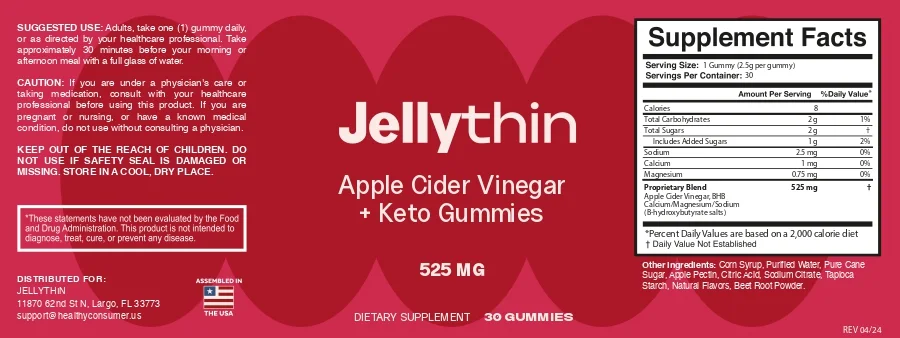
That last point matters because ACV gummies are not standardised across brands. One company's gummy might contain 500 mg of vinegar, another's 1,000 mg, another's a blend where vinegar is only a fraction of the total weight. A "two gummies" instruction on one label and on another can deliver very different amounts of acetic acid. Our walk-through of how to read a keto gummy label and nutrition panel shows where those figures hide. So the honest answer to "how many should I take" always starts the same way: read your own label, and treat its serving size as the answer rather than a suggestion to improve on.
Where the two-to-three number comes from
The serving sizes you see are reverse-engineered from the research on liquid vinegar. Across the human trials that people cite for ACV, the daily dose is almost always 15 to 30 millilitres — one to two tablespoons — usually diluted in water and taken with a meal. At the roughly 5% acetic acid found in a standard bottle, 15 ml delivers about 750 mg of the active compound, and 30 ml about 1,500 mg (Kondo 2009, PubMed 19661687).
Gummy makers aim their daily serving at that window. If a product carries a few hundred milligrams of vinegar per gummy, then two or three of them roughly approaches the lower end of the studied dose. This is the sensible design logic behind "two to three per day." It also quietly reveals the format's main limitation: many gummies fall short of the trial dose even at the full recommended serving, which is a reason to respect the label rather than a reason to exceed it in search of a bigger effect.
Why more is not better
The instinct to double a dose comes from medicine, where more of an active often means a stronger effect. The vinegar evidence does not work that way. The trials that reported benefits — a lower post-meal glucose rise, modest changes in weight on top of a controlled diet — did so at ordinary doses taken alongside carbohydrate. Nobody has demonstrated that pushing the dose higher produces proportionally bigger results, and there is no established dose-response curve to climb.
What taking extra gummies reliably does is push you outside the range anyone has actually studied. That is the wrong direction on two counts. First, you gain no documented benefit for it. Second, you multiply everything that comes bundled with the gummy — the sugar, the acid, and the small mineral load — without the offsetting upside. The sugar side of that is quantified in sugar in keto gummies, the acid side in ACV and tooth enamel, and the medical cautions in side effects and who should avoid them. When a habit has a flat benefit curve and a rising cost curve, the rational move is to sit at the labelled serving, not above it.
The label serving is where the benefit plateaus and the downsides begin to climb. There is no version of the evidence where the fourth or fifth gummy earns its place.
The added sugar hiding in a "healthy" gummy
A gummy has to taste like a gummy, and that usually means sugar. Read the Supplement Facts panel and you will typically find somewhere between roughly one and two grams of added sugar per gummy, which puts a two-to-three gummy daily serving at around two to five grams (FDA: Added Sugars on the Nutrition Facts Label). On its own that is trivial. The problem is arithmetic: if you take extra gummies "to be thorough," or graze on them because they taste like candy, that number climbs fast.
For context, U.S. dietary guidance suggests keeping added sugars under about 10% of daily calories — on the order of 50 grams for many adults, and less for people managing weight or blood sugar. A disciplined daily serving barely dents that budget. Four or five gummies taken on impulse, day after day, is a different story, and it undercuts the very goal most people bought the product for. If you are watching carbohydrate intake specifically, sugar-free or low-sugar formulations exist and are worth choosing — but the discipline of the serving size matters more than the format.
Potassium, acid and medication cautions
Vinegar is generally recognised as safe as a food, and at labelled gummy doses the risks are small for most healthy adults (MedlinePlus: Herbs and Supplements). There are, however, a few specific situations where the daily count is worth taking seriously rather than casually. None of these are reasons to panic; they are reasons to stay at the label and to talk to a clinician if any apply to you.
- Potassium. Very high, sustained vinegar intake has been associated in isolated case reports with low blood potassium. Those cases involved far more than a few gummies, but it is a genuine reason not to megadose — especially if you take a diuretic, insulin, or another drug that can lower potassium.
- Blood-sugar medication. Because acetic acid can blunt the post-meal glucose rise, it can in principle add to the effect of insulin or oral glucose-lowering drugs. Anyone on those medicines should raise ACV products with their prescriber before making them a daily habit.
- Teeth and reflux. Acid exposure erodes enamel over time and can aggravate existing reflux. Gummies are gentler than swigging liquid vinegar, but more gummies means more acid, more often — another argument for the labelled serving.
- Pregnancy, nursing, or existing conditions. The research base is thin here, so the conservative default is to check with a healthcare professional rather than self-dose.
A safe daily routine that respects the label
Put the pieces together and a practical routine is simple. Take the serving your specific label states — for most products that is two to three gummies — and take it with or just before your largest carbohydrate meal, since that is when the acetic acid has something to act on. Have water with it. Don't brush your teeth immediately afterwards; rinse instead, because brushing acid-softened enamel does more harm than good.
Keep the bottle out of casual reach so it stays a supplement and not a snack, and if you ever feel the urge to take more for faster results, treat that as a cue to check your expectations rather than your dose. The realistic role of an ACV gummy is a small, consistent nudge layered on top of an eating pattern that is already moving in the right direction. Taken that way, at the amount on the label, it is a low-risk daily habit. Taken as a shortcut you can accelerate by swallowing more, it simply costs you sugar and acid for nothing.
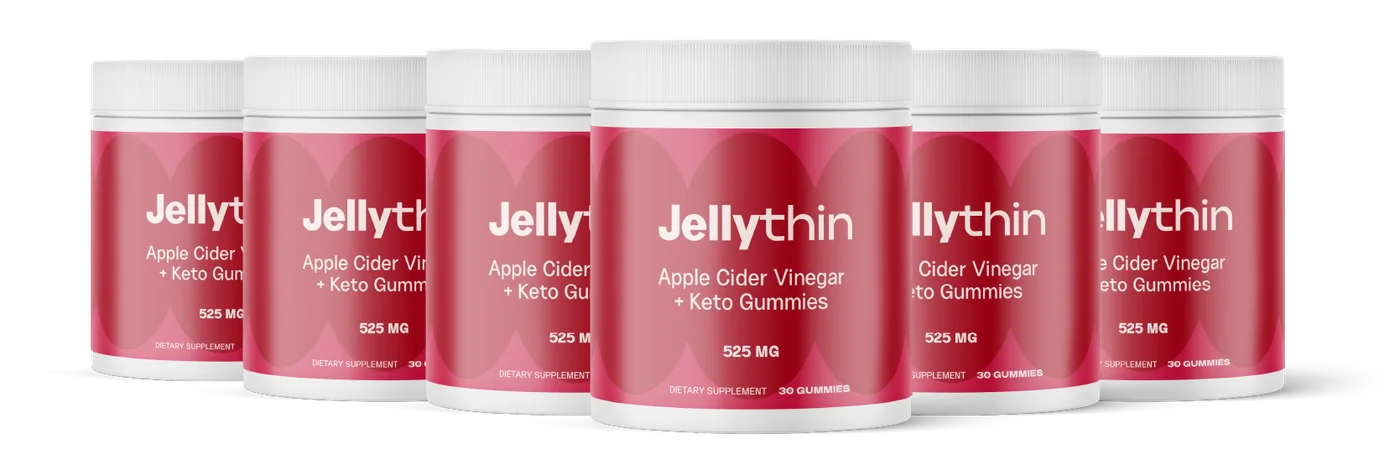
See the serving size and sugar on the real panel
The full Supplement Facts transcription, the directions, the added-sugar line and today's official-store pricing — on one page.
Get OfferFrequently asked questions
What is the recommended ACV gummy dose?
Almost every brand lists two to three gummies daily, usually taken with food. That total is designed to approximate the one to two tablespoons of liquid vinegar used in trials. The correct dose is whatever your specific label states, so read it rather than assuming a category-wide number.
Can you take too many ACV gummies?
Yes. Doubling up will not speed anything up, and it multiplies the added sugar, the acid exposure to your teeth, and any effect on potassium. There is no evidence that a larger daily count outperforms the labelled serving, and several reasons it can cause problems.
Do more gummies mean faster results?
No. The vinegar research shows small, gradual effects at ordinary doses eaten alongside food, not a dose-response race. Taking extra gummies pushes you past the studied range into territory nobody has tested, which is the wrong direction for both safety and value.
How much added sugar comes with a daily dose?
It varies by brand, but two to three gummies commonly carry roughly two to five grams of added sugar in total. That is minor on its own, yet it counts toward the day's added-sugar budget and is one more reason not to exceed the labelled serving.
References
- MedlinePlus (U.S. National Library of Medicine) — Herbs and Supplements.
- National Center for Complementary and Integrative Health — Herbs at a Glance.
- U.S. Food and Drug Administration — Dietary Supplement Labeling Guide.
- U.S. Food and Drug Administration — Added Sugars on the Nutrition Facts Label.